
Collaborative learning (which is distinct from traditional pedagogy ) occupies a central place in contemporary educational approaches, emphasizing interaction and cooperation between learners. This teaching method, often referred to as group learning or social learning, promotes knowledge sharing, skill development, and the creation of enriching learning experiences. By integrating aspects such as collaboration, the exchange of ideas, and collective problem-solving during activities between several groups, collaborative learning is emerging as an essential approach in the training process.
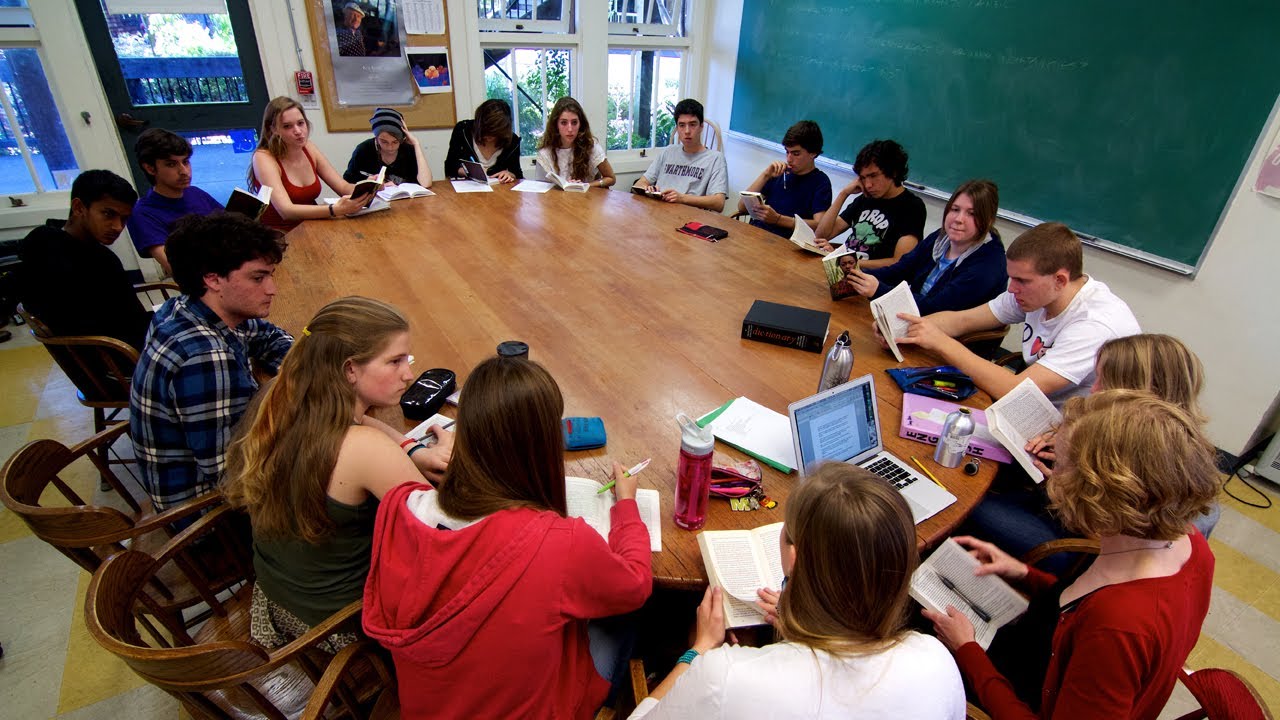
Collaborative learning, whether among students or in the workplace, differs from traditional teacher-centered methods, which emphasize the one-way transmission of knowledge. Instead, this approach places learners at the heart of the learning process, encouraging active participation and responsibility in their own education. Groups of learners, whether students in a class or professionals in continuing education, work together to achieve common learning goals—the famous 1+1=3.
Within these groups, interactions play a crucial role. Members collaborate by exchanging ideas, comparing perspectives, and each contributing their unique skills. This dynamic stimulates each learner’s creativity, critical thinking, and collaborative problem-solving. Rather than simply passively absorbing information in training, learners engaged in collaborative learning are encouraged to actively question, discuss, and construct their own understanding.
Collaborative learning in training can take different forms. In formal education, it can occur within classrooms where students collaborate on projects, discuss concepts, and share knowledge. Moreover, modern technologies such as digital learning have broadened the horizons of collaborative learning by enabling remote interactions via online platforms, which is particularly relevant in the current context marked by the increasing digitalization of education.
The benefits of this approach are numerous. First, it promotes the development of essential social skills such as effective communication, conflict resolution, and teamwork. These skills are extremely valuable in the professional world, where collaboration is often required to address complex challenges. Furthermore, collaborative learning strengthens understanding of topics by encouraging learners to explore different perspectives, enriching their knowledge and ability to approach problems from a variety of angles.
The learner experience is also profoundly enhanced through this type of learning. Interactions with peers make learning more stimulating and engaging, reducing the risk of disinterest or dropping out. Working in groups allows learners to support each other and overcome obstacles more effectively, strengthening their self-confidence and their sense of belonging to a learning community.
However, it is important to recognize that collaborative learning is not without challenges. Group members may have varying levels of skill and commitment, which can lead to tensions or inequalities in each other’s contributions. Conflicts can also arise when opinions diverge, requiring the establishment of management and resolution mechanisms.
In the context of collaborative learning, the role of the trainer evolves to become a guide and facilitator of the learning experience. The trainer is no longer simply a dispenser of knowledge, but plays a crucial role in creating and maintaining an environment conducive to collaboration and group interaction.
The trainer thus assumes several essential missions to ensure the success of collaborative learning. First, they must design tasks and activities that encourage collaboration and active participation. These activities can vary, from group projects to guided discussions or interactive simulations. The trainer ensures that these tasks are stimulating, encouraging learners to engage in fruitful exchanges and solve problems together. Their design time is therefore essential.
The trainer then acts as a facilitator, guiding interactions within the group. They can ask open-ended questions to stimulate reflection, encourage everyone’s participation, and foster a climate of mutual respect. The trainer is also there to resolve any conflicts that may arise and maintain a balance between the various contributions, thus preventing certain group members from monopolizing the discussion.
Another important aspect of the trainer’s role is to provide relevant resources and guidance to support learners in their collaborative work. They can recommend readings, share examples, and offer constructive feedback to guide learners in their understanding and application of concepts. The trainer thus helps learners develop information research and evaluation skills, which contribute to strengthening their autonomy in the learning process.
The trainer plays a key role in reflecting on group dynamics and the evolution of the learning process. They can organize feedback sessions where learners share their experiences and observations regarding group collaboration. These moments of collective reflection allow for adjustments to strategies and methods along the way, ensuring that collaborative learning remains effective and beneficial for all participants.
In short, the trainer in the context of collaborative learning plays a pivotal role as a guide, facilitator, and creator of a stimulating learning environment. Their role goes beyond simply imparting knowledge to encompass promoting collaboration, critical thinking, and fruitful interaction among learners. By working together with group members, the trainer ensures that each individual has the opportunity to get the most out of the collaborative learning experience and develop skills that transcend the confines of the classroom.
In conclusion, collaborative learning is more than just an educational method; it’s a philosophy that is transforming the way we think about education. By emphasizing group interaction, cooperation, and collective knowledge creation, this approach provides learners with a richer and more relevant learning experience. It also prepares learners to tackle real-world challenges by cultivating essential social and cognitive skills. As technology continues to reshape the way we learn, collaborative learning remains a fundamental pillar of modern education.