
Collaborative learning relies on the group, perceived as a vector of mutual support, a lever of motivation, and a source of knowledge. But this definition remains partial. Because the learner, captured in their individuality, also reveals themselves at the heart of this methodology by becoming an actor in their own training. They then live an experience between emotion and astonishment.
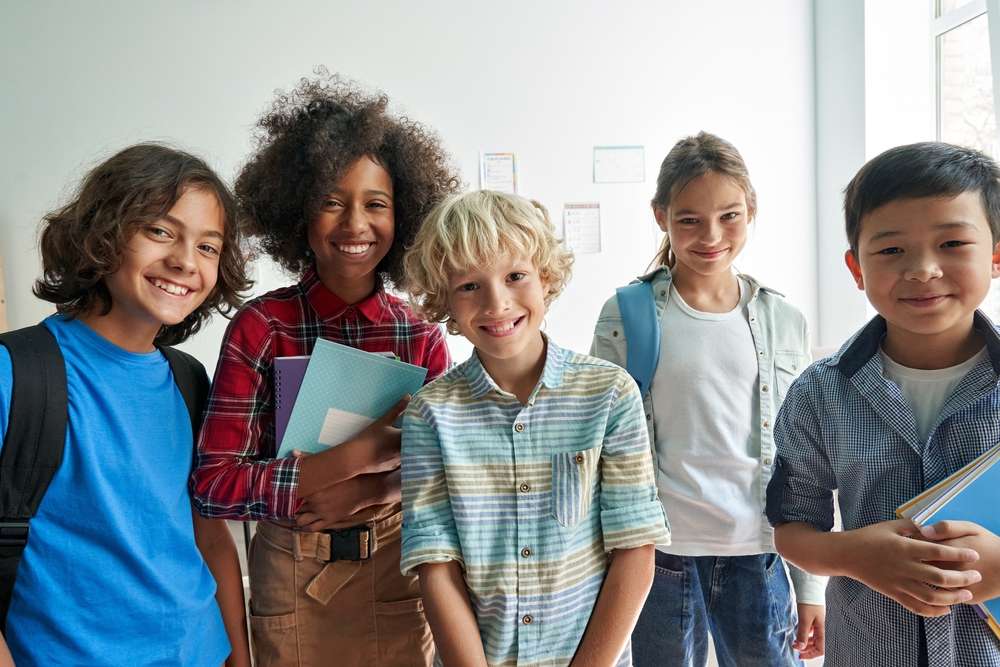
When the learner questions his own knowledge
Collaborative learning is rightly one of the hottest trends in the training sector. And it is the rise of Digital Learning, revolutionizing practices, which has contributed, against all expectations, to promoting this methodology. Indeed, while e-learning gave the image of an employee left to their own devices in front of their computer, Digital Learning has paradoxically demonstrated the benefits of mutual assistance between learners, and its positive impact within organizations. And for good reason, communities of practice, forums, and other video conferences have finally shaken up this caricatured vision of distance learning. Through these different channels, learners with converging objectives are encouraged to exchange and compare their points of view as equals. They even come to question themselves by reexamining their knowledge, then arguing their positions. At the same time, they make the effort to understand each other’s opinions to ultimately progress together and separately. France Henri and Karin Lundgren-Cayrol, PhDs in educational technology and authors of ” Collaborative Learning and New Technologies,” say no different. They explain that “collaborative learning is a process that combines individual and collective approaches to knowledge construction.” It is neither a fusion of individual intelligences nor even a pooling of ideas. It is indeed a technique that consists of appropriating new knowledge.
Quoting teacher-researcher Alain Baudrit, the Fourgous mission emphasizes that collaborative learning is “more useful for non-fundamental learning, which lends itself more to reasoning and reflection.” Within a small group (not exceeding 12 people according to France Henri and Karin Lundgren-Cayrol), participants who share a common goal develop collective knowledge, but also individual skills. In a reassuring context, imbued with kindness, they dare, for example, to speak out to verbalize their problems. They thus increase their ability to communicate with each other, to share their ideas, but also to debate and negotiate, to accept the ideas of their peers as viable solutions, and ultimately to create social bonds. Because it energizes the group, facilitates understanding and ownership of the topics covered, bandalso allows learning to work and gain autonomy, collaborative learning enriches the learner’s journey. Especially since it gives the learner great freedom of action, particularly in terms of content and learning strategy.
Towards more investment and commitment
With collaborative learning, the role of the learner is reinforced. Far from being passive, he is, on the contrary, an actor in his own training since this methodology is based on the co-construction of knowledge, that is to say that the learner is at the heart of his learning by becoming the author himself (we are beginning to hear talk in the world of training of CGU, User Generated Content ). This has several impacts on the individual who finds himself responsible for his learning and stimulated by the desire to learn. The learner is also more invested in his training, where he is encouraged to give free rein to his creativity. Thanks to the process of corrections between peers, but also to the inverted classroom approaches developed by Marcel Lebru, the learner contributes to the learning of the other members of the group. Indeed, he shares with him the fruit of his research, which will give rise to interactions and a diversification of teaching. Thus, knowledge is not transmitted by the trainer, but rather constructed by the learners themselves. The latter thus acquire a set of skills which will allow them, through indirect learning, to master collaboration processes, to become facilitators themselves by building, for example, a collaborative workshop, a nd to continue to develop well after the end of the training. Individualizing learning is no longer enough; the learner is in search of a socio-emotional experience that gives meaning to their action and satisfies a personal interest.
From trainer to facilitator
The trainer, for their part, does not disappear. On the contrary, they act as a guide. Their new role “is to give learners as much control over their learning as possible,” emphasize France Henri and Karin Lundgren-Cayrol. They point out that “as learners develop the ability to learn independently and in groups, the trainer’s role fades.” Indeed, they move, step by step, from moderator with tight supervision during the exploration phase, to facilitator during the so-called development phase, and to coach (sometimes tutor) during the evaluation phase. At this stage, they are supposed to intervene only at the learners’ request. But they can also speak to encourage reflection and improve understanding. Throughout the process, the trainer takes on the role of facilitator of cognitive production. This is how each learner gradually takes control of their skills development. The benefits of collaborative learning are fully reaping the benefits for the company because, in a project-based organization, the learner is able to demonstrate empathy, listening skills, and dialogue. The goal: to achieve team objectives while developing personal satisfaction from collective and individual successes. They will also find greater meaning in their work and be much more engaged in the company.